

So, we know that globally AI’s is just freaking crazy, being a gamer when we see it here, that AI could fundamentally change tons of things in gaming industry in the next three years but we have tried to cover up just 30 that deem to fit far more than others. So, it’s a fact, the integration of artificial intelligence is set to revolutionize gaming experiences, offering unprecedented levels of immersion, personalization, and interactivity. You can also read our previous post about how AI changes gaming industry here. Here are 30 exciting developments we can expect to see:
#30 Dynamic Narrative Generation – AI-Powered Storytelling
AI will create branching storylines of various games, including ones which we have been playing for decades, that adapt in real-time to player choices, ensuring that each playthrough is unique. For example, an RPG might use AI to generate side quests tailored to your character’s background and past decisions, making the world feel more responsive and alive. This technology could analyze player behavior patterns, preferred storytelling styles, and even emotional responses to craft narratives that resonate on a deeply personal level. Imagine a game where the main plot evolves based on the collective choices of the player base, creating a truly living world that changes over time. This could lead to games with near-infinite replayability, as each new playthrough could offer a completely different story experience.
#29 Intelligent NPCs Bringing Virtual Characters to Life
Non-player characters will/can/would/could become more lifelike and responsive, with AI driving their behaviors, dialogues, and reactions to player actions. Imagine conversing with an NPC in a medieval town, and they remember your previous interactions, adjusting their attitude and information based on your reputation and past deeds. These AI-driven characters could have their own goals, routines, and relationships that evolve over time, creating a more believable and immersive game world. For instance, a shopkeeper might remember your haggling tactics and adjust their prices accordingly, or a rival character might develop a grudge and actively work against you based on your past encounters. This level of NPC intelligence could lead to emergent storytelling opportunities that even the game developers couldn’t predict.
#28 Adding Infinite Worlds at Your Fingertips
AI algorithms will create vast, diverse game worlds, reducing development time and costs while offering players nearly infinite content. A space exploration game could use AI to generate unique planets, flora, and fauna, ensuring that every new discovery feels genuinely novel. This technology could extend beyond just environmental generation, creating unique quests, characters, and even entire civilizations on the fly. Imagine a strategy game where each new campaign features a completely different set of factions with unique technologies and cultures, or an RPG where every dungeon is procedurally generated with its own distinct architecture, traps, and boss encounters. This could effectively end the concept of “completing” a game, as there would always be new content to explore.
#27 Adaptive Difficulty Scaling AKA Personalized Challenge
Games will use AI to analyze player performance and dynamically adjust difficulty levels in real-time, providing a consistently challenging yet enjoyable experience. For instance, a first-person shooter might subtly increase enemy accuracy if a player is dominating, or provide more health pickups if they are struggling. This system could be incredibly nuanced, adjusting individual elements of gameplay rather than broad difficulty settings. In a racing game, for example, the AI might adjust the performance of rival cars, the frequency of obstacles, or even the layout of the track itself to maintain an optimal level of challenge. This technology could make games more accessible to a wider range of players while still providing a satisfying experience for hardcore gamers.
#26 Bringing Characters to Life USING Enhanced Motion Capture and Animation
AI will improve motion capture technology, allowing for more realistic and nuanced character animations. This could lead to more expressive character performances in story-driven games, with facial expressions and body language that convey emotion with unprecedented realism. AI could analyze vast databases of human movement to generate animations on the fly, creating characters that move naturally in any situation. This technology could be particularly impactful in VR games, where realistic character movement is crucial for immersion. Imagine interacting with virtual characters whose subtle facial expressions and body language are so realistic that you forget you’re in a game.
#25Learning Curve Mastery
AI will create personalized learning curves for players, introducing game mechanics and concepts at a pace tailored to individual skill levels and learning styles. A complex strategy game might use AI to identify which aspects of the game a player is struggling with and offer targeted guidance. This system could adapt in real-time, providing more or less instruction based on how quickly a player picks up new concepts. For example, a player who demonstrates quick mastery of basic combat moves might be rapidly introduced to more advanced techniques, while another player might receive more practice with the basics before moving on. This could make complex games more approachable while still allowing experienced players to quickly get to the challenging content.
#24 Voice Recognition and Natural Language Processing: Talk to Your Game
Players will be able to interact with games using natural speech, issuing commands to AI teammates or engaging in conversations with NPCs using their own voice. Imagine playing a stealth game where you can whisper commands to your AI squadmates, adding a new layer of immersion to the gameplay. This technology could go beyond simple command recognition, allowing for nuanced conversations with in-game characters. An AI system could analyze not just the words you say, but your tone, tempo, and even emotional state to provide appropriate responses. This could lead to incredibly immersive role-playing experiences where you can truly embody your character through natural conversation.
#23 Emotionally Responsive Gaming Feats
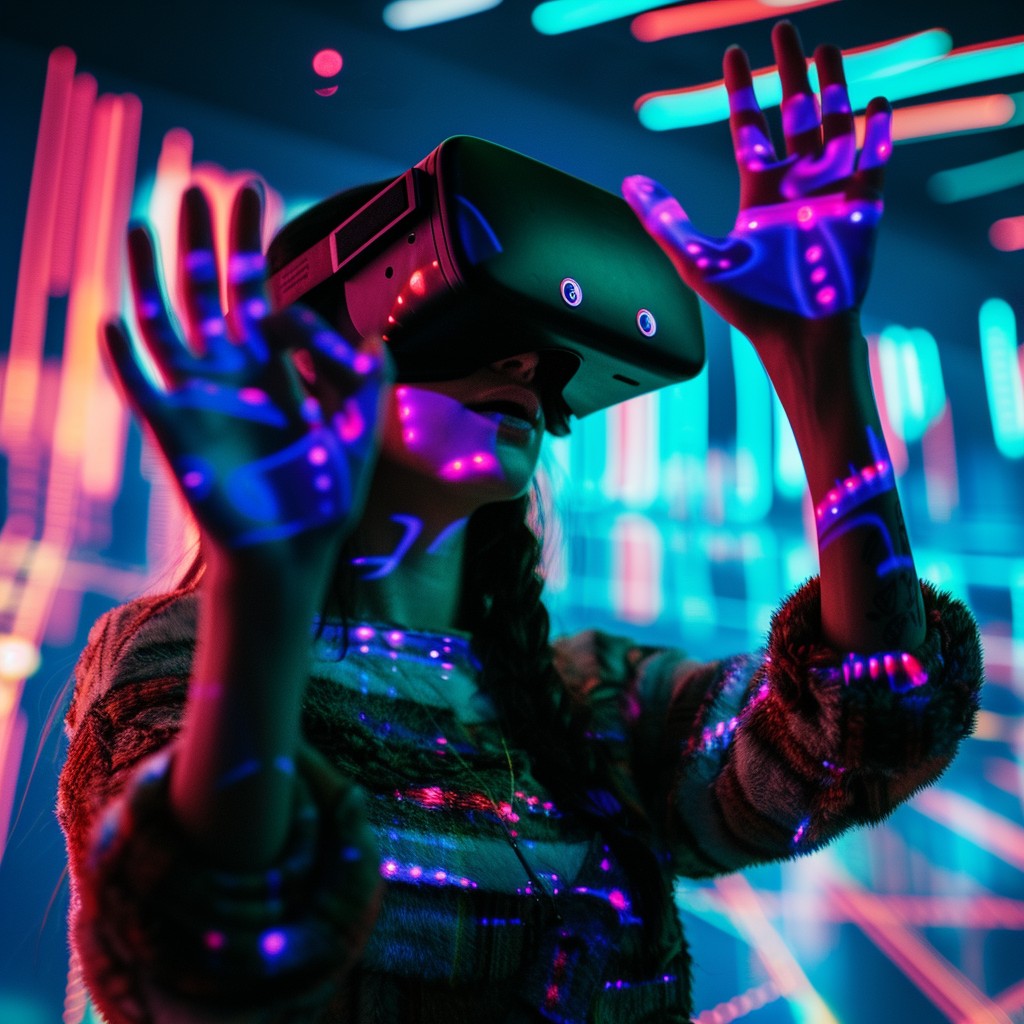
AI will analyze players’ emotional states through facial recognition, voice analysis, and biometric data, adjusting the game experience accordingly. A horror game might use this technology to determine when a player is feeling too comfortable and ramp up the tension accordingly. This could extend to all genres, with game music, pacing, and even narrative elements adapting to keep the player in an optimal emotional state. For example, an open-world game might detect when a player is feeling frustrated with a particular quest and subtly guide them towards a different, potentially more enjoyable activity. This technology could lead to games that feel almost supernaturally attuned to the player’s desires and emotional needs.
#22 AI-Driven Game Testing & Perfection
Developers will use AI to thoroughly test games, identifying bugs, balance issues, and exploits more efficiently than ever before. This could lead to more polished games at launch and quicker post-release patches. AI testers could play through games thousands of times faster than human testers, exploring every possible interaction and scenario. This technology could be particularly useful for testing multiplayer game balance, simulating millions of matches to ensure no particular strategy or character is overpowered. Additionally, AI could be used to test game performance across a wide range of hardware configurations, helping to optimize games for a variety of systems.
#21 Personalized In-Gaming Seamless Integration
AI will analyze player preferences and behaviors to deliver targeted in-game advertisements that feel natural and non-intrusive. For example, a racing game set in a city might feature billboards displaying ads for products that align with the player’s interests. This technology could go beyond simple product placement, integrating branded content in ways that enhance rather than detract from the game experience. Imagine an open-world game where the brands you interact with most frequently offer in-game rewards or unique quests. This could create a more realistic and immersive game world while providing a new revenue stream for developers, potentially leading to more free-to-play games with high production values.
#20 Enhanced Physics Simulations & Reactions
AI will power more realistic and complex physics engines, allowing for more detailed environmental interactions and destruction. Imagine a disaster survival game where every building reacts uniquely to damage based on its structure and materials. This technology could simulate complex fluid dynamics, soft body physics, and even molecular-level interactions. In a fantasy game, spells could interact with the environment in unprecedented ways, with fire spreading realistically or ice spells actually changing the physical properties of surfaces. This level of physical simulation could lead to entirely new gameplay mechanics and puzzle designs based on manipulating the game world in complex ways.
#19 Intelligent Matchmaking
Multiplayer games will use AI to create balanced and enjoyable matches, considering factors beyond just skill level, such as play style, preferred roles, and social compatibility. This could lead to more satisfying online gaming experiences and potentially new friendships. The AI could analyze not just your in-game performance, but also your communication style, the times you play, and even your cultural background to create teams that work well together. In competitive games, this could result in nail-bitingly close matches more often, while in cooperative games, it could lead to teams that complement each other’s skills perfectly.
#18 AI Companions Our New Best Friend
Single-player games will feature more sophisticated AI companions that learn and adapt to the player’s style, offering tactical support and emotional connection. Picture a party-based RPG where your AI companions develop unique personalities based on your interactions and the challenges you face together. These companions could have deep, branching dialogue trees that evolve based on your shared experiences, creating a sense of genuine relationship development. In strategy games, AI advisors could learn your preferred tactics and offer suggestions tailored to your playstyle, or even take over management of certain aspects of your empire that you find less engaging.
#17 Realistic Crowd Simulations – Bringing Cities to Life
AI will enable more believable and diverse crowd behaviors in games, creating more immersive urban environments or large-scale battle scenes. A city-building game might use this technology to simulate complex traffic patterns and pedestrian behaviors that react realistically to the player’s urban planning decisions. In an open-world game, crowds could form organically around interesting events, with individual NPCs displaying curiosity, fear, or excitement as appropriate. This technology could be particularly impactful in historical or political simulation games, where the behavior of crowds can significantly influence the course of events.
#16 Advanced Character Custom
AI will power more detailed and realistic character creation tools, allowing players to generate unique avatars with unprecedented levels of customization. This could include AI-driven systems that age your character realistically throughout a game’s storyline. The AI could analyze thousands of real human faces to ensure that any combination of features you choose results in a believable character. In games with a long time scale, your character’s appearance could change naturally over time, with factors like sun exposure, diet, and lifestyle affecting their looks. This technology could also extend to clothing and gear, with AI systems generating unique designs based on your preferences and the game world’s culture and technology.
#15 Intelligent Music Composition & Custom Songs
AI will create dynamic, adaptive soundtracks that respond to gameplay events and player emotions in real-time. Imagine exploring an open world where the music seamlessly shifts to match the mood of each new area you discover, enhancing the emotional impact of your journey. This AI composer could take into account your personal music preferences, the pace of your gameplay, and even your emotional state to create a truly personalized audio experience. In multiplayer games, each player could hear a slightly different version of the soundtrack optimized for their own experience, while still maintaining overall thematic consistency.
#14 Enhanced Anti-Cheating Measures & 100% Fairplay
AI will be used to detect and prevent cheating in online games more effectively, ensuring fairer play for all and without a doubt that could involve analyzing player behavior patterns to identify suspicious activities that human moderators might miss. The AI could learn from every new cheating method it encounters, constantly evolving to stay ahead of cheat developers. This technology could also be used to create more sophisticated bots for single-player modes, providing a challenging experience that mimics human play without resorting to cheating or inhuman reflexes.
#13 Personalized Game Recommendations
AI algorithms will provide more accurate game recommendations based on a player’s gaming history, preferences, and even their current mood. This could help players discover new games they will love, potentially from smaller indie developers they might have otherwise overlooked. The AI could analyze not just the genres you enjoy, but specific gameplay mechanics, narrative themes, or even color palettes that appeal to you. This technology could be integrated into game platforms to suggest not just new purchases, but also which games in your library you might enjoy revisiting based on your current interests.
#12 AI-Powered Mod Tools
Game modding communities will benefit from AI-assisted tools that make it easier to create new content, potentially leading to more diverse and innovative mods. For example, an AI system could help modders generate new character models or voice lines that fit seamlessly into the existing game world. This technology could democratize game development, allowing people with ideas but limited technical skills to create sophisticated mods. Imagine an AI system that could take a written description of a quest and generate all the necessary assets, dialogue, and scripting to bring it to life in the game.
#11 More Real Virtual World
AI will improve VR experiences by predicting player movements, reducing latency, and enhancing the realism of virtual environments. This could lead to more immersive and comfortable VR gaming sessions, potentially broadening the appeal of VR technology. AI could be used to dynamically adjust the level of detail in VR environments based on where the player is looking, optimizing performance without sacrificing visual quality. In social VR spaces, AI could drive more realistic avatar movements and expressions, making interactions feel more natural and engaging.
#10 Augmented Reality Integration AKA Blending Realities
 AI will enhance AR gaming experiences by improving object recognition and environmental mapping, leading to more seamless integration of game elements into the real world. Imagine a Pokemon GO-style game where AI allows virtual creatures to interact more realistically with your surroundings, hiding behind real-world objects or reacting to weather conditions. This technology could also be used to create persistent AR worlds overlaid on real locations, with AI managing how these virtual elements evolve over time based on player interactions and real-world events.
#9 Cross-Platform AI Assisting
Game-agnostic AI assistants will help players manage their gaming lives across multiple platforms, offering tips, tracking achievements, and even scheduling gaming sessions with friends. This could help players balance their gaming hobby with other responsibilities more effectively. The AI could learn your playing habits and preferences, reminding you of limited-time events in your favorite games or suggesting shorter games when you have limited free time. In multiplayer games, it could help coordinate sessions with friends, finding optimal times when everyone is available and even suggesting games that suit the whole group’s tastes.
#8 AI-Driven Esports Coaching
Aspiring professional gamers will benefit from AI-powered coaching tools that analyze their gameplay, identify areas for improvement, and provide personalized training regimens. This could democratize access to high-level gaming instruction and potentially discover new esports talent. The AI coach could break down professional matches, highlighting strategies and techniques relevant to the player’s skill level and playstyle. It could also simulate high-level opponents, allowing players to practice against AI that mimics the strategies of top professionals.
#7 Blockchain and AI Integration AKA Digital Ownership
The combination of AI and blockchain technology could lead to more secure and transparent in-game economies, as well as new forms of player-owned assets. This could revolutionize how players invest time and money into games, potentially allowing for true ownership of digital items across multiple games. AI could be used to manage the balance of these economies, adjusting drop rates or resource generation to maintain stability. It could also help in the creation of unique, procedurally generated items that are truly one-of-a-kind, with blockchain ensuring their authenticity and ownership.
#6 Haptic Feedback Enhancement
It would improve haptic feedback in gaming peripherals, creating more nuanced and realistic tactile sensations. For example, a racing game might use AI to generate highly detailed vibrations that simulate different road surfaces and vehicle conditions. This technology could be particularly impactful in VR gaming, enhancing the sense of presence in virtual worlds. Imagine feeling the texture of different materials as you craft items in a survival game, or the subtle shifts in terrain as you sneak through an enemy base in a stealth game.
#5 AI Game Masters/Digital Dungeon Masters
Tabletop RPG-style games will feature AI game masters capable of creating and running complex, adaptive campaigns. This could bring the depth and flexibility of tabletop gaming to digital platforms, with AI handling the complex task of narrative management. The AI GM could generate unique scenarios on the fly, adapting the story based on player choices and even their apparent interests. It could also manage NPCs, giving each one a distinct personality and goals that evolve over the course of the campaign.
#4 Photorealistic Graphics Indistinguishable from Reality
The artificial intelligence would assist in creating and rendering increasingly photorealistic game graphics, potentially reducing the workload on artists and allowing for more detailed game worlds. This could lead to games that are visually indistinguishable from reality, especially when combined with advanced VR technology. AI could be used to automatically generate high-resolution textures from low-res inputs, or to create realistic animations from simple motion capture data. This technology could also help in the creation of vast open worlds, automatically generating unique, detailed environments based on high-level design inputs.
#3 Cross-Game Persistent AI Characters
So the players would/could be able to carry AI-driven companions or nemeses across multiple games from the same developer or within the same universe, creating a more connected gaming experience. Imagine an NPC friend you made in one game recognizing and referencing your shared adventures when you encounter them in a sequel. This technology could lead to the creation of vast, interconnected game universes where your actions in one title have far-reaching consequences in others. AI could manage the complex task of maintaining consistency across these different games, ensuring that characters evolve in believable ways based on their experiences across multiple titles.
#2 Predictive Download and Update Management Systems
AI would anticipate which games a player is likely to want to play next, pre-downloading updates or even entire games to ensure they’re ready when the player wants them. This could significantly reduce waiting times and frustration, especially for players with slower internet connections. The AI could analyze your playing habits, upcoming game releases, and even your social media activity to predict which games you’re likely to play. It could also optimize storage usage, automatically uninstalling games you’re unlikely to return to soon (after backing up save data, of course) to make room for new titles.
#1 Revolutionizing With New Game Genres
Perhaps most excitingly, the integration of AI into game development tools and processes could lead to entirely new genres of games that we can’t even imagine yet. These could be games that adapt so completely to individual players that no two people have the same experience, or games that blur the line between reality and virtual worlds in unprecedented ways. Imagine a game that integrates with every aspect of your digital life, creating a persistent alternate reality that weaves seamlessly into your day-to-day activities. Or perhaps we’ll see the emergence of AI-driven narrative games that can generate entire worlds and stories from a single prompt, creating experiences as vast and varied as human imagination itself.
As we look to the future, it’s clear that AI has the potential to transform every aspect of the gaming industry, from development and player experience to marketing and community management. While some of these advancements may raise ethical questions or challenges, they also promise to make games more immersive, accessible, and engaging than ever before. The next three years are sure to be an exciting time for gamers and developers alike as we witness the rapid evolution of this technology and its impact on our beloved medium.