The claim is that any Pi sensor project counts as citizen science. What made me curious is where the readings go once the Pi has them. Some builds feed a shared network, and others end in a personal dashboard. So my question is which Pi projects hand their data to someone else, and which of those to build. The answer depends on four things each project publishes. Those are where the data goes, what the hardware costs, which boards it supports and whether the network is still open.
Which projects feed a real network?
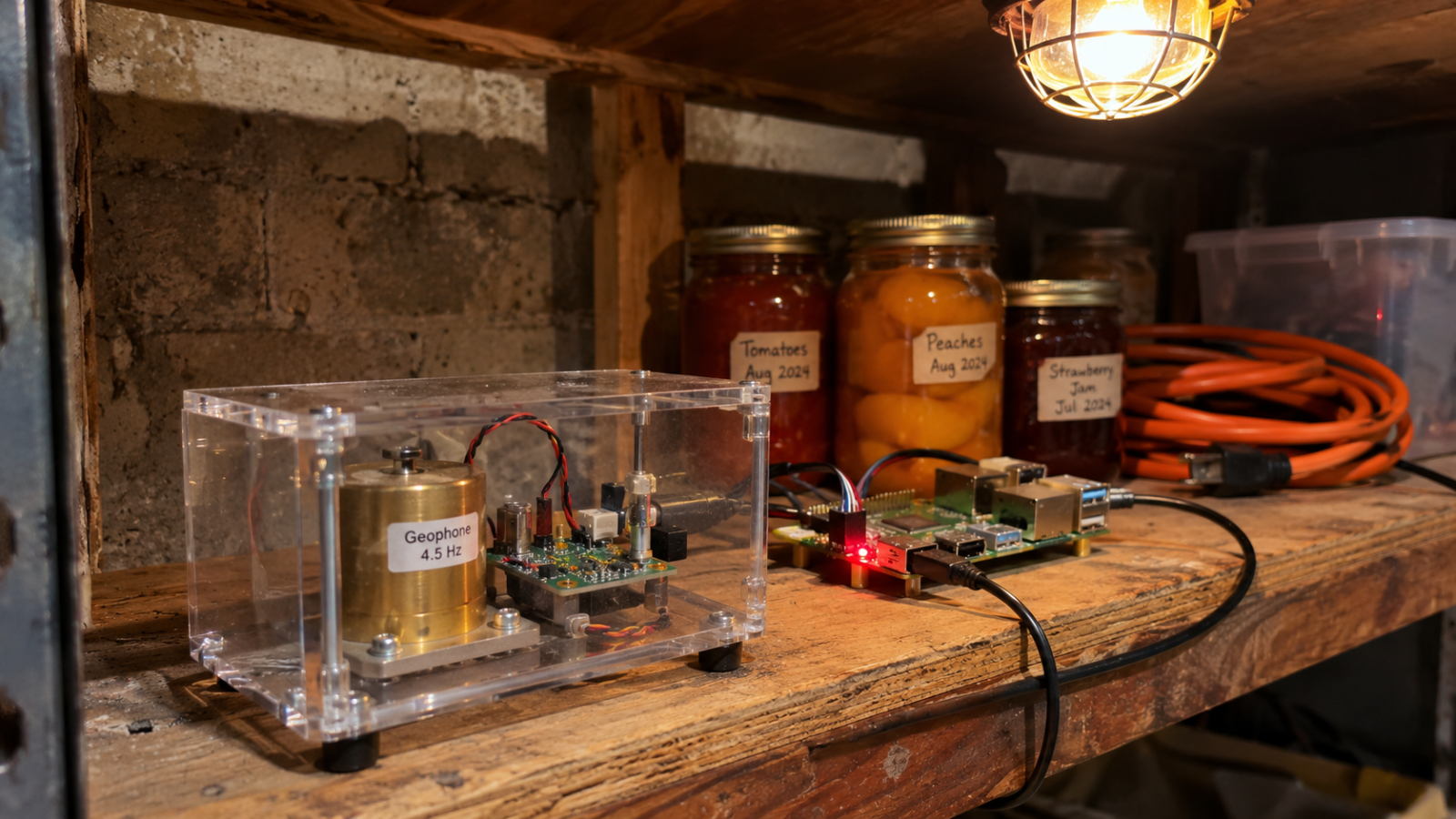
Raspberry Pi's citizen science roundup covers several kinds of build. Raspberry Shake is a seismometer built on a Pi 3 or 4, with geophone, accelerometer and infrasound sensors. Enviro+ appears for air quality, though the roundup does not say where its readings are sent. Penguin Watch used ruggedised cameras that Arribada built around Raspberry Pi Zero computers. Meteor cameras get a mention too. The roundup explains what each build is. My question is narrower, and it is about where the numbers end up.
Raspberry Shake, which calls its network "the largest online seismic network!" on its products page, says in its manual that data can be downloaded from the cloud using FDSN web services. The superlative is the company's own wording about itself. FDSN web services are a standard way to request seismic data.
BirdNET-Pi identifies birds by sound, through a USB microphone or sound card plugged into the Pi. Its network is BirdWeather. The BirdWeather stations page marks Fixed Location stations as ones running the BirdNET neural network locally, mostly on a Raspberry Pi. So the identification happens on the station's own board, and BirdWeather is where the station is listed.

The third network is the Global Meteor Network. The MagPi says the network's results are published daily on the project website.

The citizen science label fits the air quality build less well. Raspberry Pi's SDS011 air quality guide uploads its readings to Adafruit IO. The guide calls Adafruit IO "an online service for storing data and making dashboards." Adafruit IO is a storage and dashboard service, not a community network.
What does each one cost?
The Raspberry Shake products page lists a DIY option at $294.99. The RS1D indoor unit costs $584.99. The RS3D is $1,134.99 indoors and $1,404.99 in its outdoor version. Live Data Feeds cost another $12 a year.
For the meteor camera, The MagPi puts the parts for a DIY Global Meteor Network camera at around €200 (£170).
In the chart, start with the left panel, where the four Shake bars share one dollar axis. The outdoor RS3D at the bottom costs nearly five times as much as the DIY option at the top. The RS1D indoor unit, second from the top, costs almost exactly double the DIY option. The GMN camera has the right panel to itself, in euros, so the chart does not rank it against the Shake.

BirdNET-Pi, the SDS011 monitor and Penguin Watch are not in the chart because none of them has a published price. Penguin Watch's cameras were made by Arribada for the project.
Which Pi each build needs
Raspberry Shake lists the Pi 3B and 4B as supported boards. That agrees with the roundup's "Pi 3 or 4".
For BirdNET-Pi, the list is longer. The Nachtzuster fork on GitHub supports the Pi 5, 4B, 400, 3B+ and Zero 2 W. Each of those still needs a USB microphone or sound card.
Any Pi version will work for the air quality build, according to Raspberry Pi's SDS011 guide. Penguin Watch, by the roundup's account, ran on the Raspberry Pi Zero.
The meteor camera is the one gap in this section. The MagPi's €200 figure covers the camera parts, and no Pi model is named alongside it.
Set the three network builds side by side and the Pi 5 shows up on one list only. BirdNET-Pi is the only one of the three whose sources name that board, through the Nachtzuster fork. That makes BirdNET-Pi the pick for a Pi 5 owner.
Home weather stations already have software that runs on a Pi. The WeeWX user's guide says WeeWX "also runs great on a Raspberry Pi, although report generation will take longer." By WeeWX's own account, the reports are the slow part on a Pi. WeeWX is software that runs the station, so a network to receive its readings is a separate choice.
Which networks are safe to join?
For UK weather builders, the Met Office route is ending. In December 2025, the Met Office's WOW blog said it would begin retiring the Weather Observations Website from January. Full decommissioning was planned for late 2026. The post also said: "there will be no direct replacement for WOW in the UK."
The WOW site itself now says it has stopped accepting new registrations and is "scheduled to close later this year". A Pi weather station set up now has no Met Office network to join. The station still records, but its readings need another destination.
The bird listener's risk sits in the software. A short notice in the original BirdNET-Pi repository reads: "I no longer maintain this project and therefore consider its installation deprecated." A guide that points to that repo leads to software its own author calls deprecated. The Nachtzuster fork lists the Pi 5 among its supported boards.
The Shake and GMN routes depend on the groups that run them. Raspberry Shake sells the hardware, promotes the network on the same page and charges $12 a year for Live Data Feeds. GMN publishes its results on its own project website. WOW shows that even a national weather service can close a network that hobbyists fed.
The finding I did not expect is about weather. It is the build where the software, WeeWX, says plainly that it runs great on a Pi. In the UK, though, the Met Office network for home weather readings is closing in 2026, and the Met Office says there will be no direct replacement.
Method note: prices, supported boards and data destinations come from the projects' published pages, the Raspberry Pi articles and The MagPi. Nothing here was built or tested for this article.

I test how tiny AI models behave on low-cost boards such as the Pi Zero. My reviews focus on speed and memory limits.
4 articles →